October is the best month for the Kanchenjunga Trek. The rain from the summer monsoon is over. The skies turn bright blue. The trails are dry and safe to walk. You get the clearest views of Kanchenjunga, the third highest mountain in the world. The forests turn orange, red, and gold. The villages celebrate Dashain and Tihar, Nepal’s biggest festivals.
But this trek is not easy. It takes about 20 to 26 days. You will walk five to eight hours a day. You will sleep at high camps where the air is thin and the nights are freezing cold. October makes the journey safer and more beautiful. It does not make it simple.
This guide covers everything you need to know. We talk about the weather, the daily itinerary, the difficulty, the permits, the packing list, and the costs. By the end, you will know if the Kanchenjunga Trek in October is right for you.
Table of Contents
Why October Is the Best Time for the Kanchenjunga Trek
Clear Skies and Great Mountain Views
October has very little rain. The monsoon clouds clear out by late September. The air is fresh and clean. That means you can see Kanchenjunga (8,586 meters / 28,169 feet) almost every day. You will also see nearby peaks like Jannu and Kabru. The sunrise and sunset light hits the snow in a way that makes every photo look special. If you want the best views of this remote region, October is the month to go.
Stable and Safe Trail Conditions
The trails dry out in October. There is no muddy mess from summer rain. There is less chance of landslides. Rivers run calm and low. Small bridges are safe to cross. You spend less energy watching your feet and more energy enjoying the walk. That is a big deal on a trek that lasts almost a month, especially when you consider how many kilometers is Kanchenjunga Circuit trek.
Perfect Trekking Weather in Autumn
The weather in October is mild and pleasant. At lower trails, the days feel warm and sunny. The temperature is about 10°C to 16°C (50°F to 61°F). At night, it drops to about 0°C to 5°C (32°F to 41°F). At higher camps near Pang Pema, nights can fall to -10°C or -15°C (14°F to 5°F). The days are comfortable. The nights are cold. You need warm layers, but you will not feel overheated while walking.
| Place / Time | Day Temp | Night Temp | What to Wear |
| Lower trails (start) | 10°C to 16°C (50°F–61°F) | 0°C to 4°C (32°F–39°F) | Light jacket, trekking shirt |
| Mid-level camps | 6°C to 12°C (43°F–54°F) | -2°C to 2°C (28°F–36°F) | Fleece, warm pants |
| High camps / Pang Pema | -2°C to 4°C (28°F–39°F) | -10°C to -15°C (14°F–5°F) | Heavy down jacket, warm hat, gloves |
Weather changes fast in the mountains. Always carry warm layers, even on sunny days.
Kanchenjunga Trek in October – Weather Breakdown
Early October (Days 1–10)
Early October feels like the end of summer turning into fall. Days are warm, around 10°C to 16°C. Nights are cool, near 0°C to 4°C at lower spots. There is a small chance of leftover rain from the monsoon, but it is rare. The forests start to change color. Green leaves turn orange, red, and yellow. It is a beautiful time to be on the trail.
Mid-October (Days 11–20)
Mid-October is the best weather window. Days are sunny and bright, with temperatures around 8°C to 15°C. Nights get colder, especially at high camps. The air is dry. The trails are clean. This is the perfect time to reach Pang Pema and see the glaciers and snow walls up close. Most trekkers plan their summit days during this window.
Late October (Days 21–31)
Late October is cooler. Day temperatures drop to about 6°C to 10°C. Nights can go below -5°C, and sometimes reach -10°C at high camps. There is a small chance of light snow near base camps. If you trek in late October, pack extra warm clothes. A good sleeping bag rated to -15°C is very important.
What You Will See on the Trail in October
Fall Colors and Beautiful Forests
October is the season of color in the Kanchenjunga region. The rhododendron forests look bright red and orange. The alpine meadows turn golden. The green hills around Taplejung become a mix of warm colors. Every day brings a new view. The air smells like dry leaves and pine. It is one of the most beautiful times to walk through the eastern Himalayas.
Local Festivals – Dashain and Tihar
October is Nepal’s biggest festival month. Dashain and Tihar bring families together. You will see celebrations in the villages along the trail, offering a great chance to learn about what ethnic groups live in the Kanchenjunga region. People wear new clothes. They prepare special food. They share their traditions with guests. Trekkers are often invited to join small gatherings. This is a rare chance to see real Nepalese culture, not just the mountains.
Mountain Views You Cannot Miss
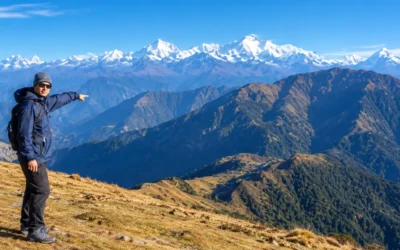
The main peak of Kanchenjunga towers over everything. At 8,586 meters, it is the third highest mountain on Earth. In October, it stands out clearly against the blue sky. You will also see Jannu, Kabru, and other snow-covered peaks. The sunrise view from Pang Pema is one of the best in Nepal. The light turns the snow pink, orange, and white in just a few minutes.
Kanchenjunga Trek Itinerary in October (Standard Route)
The standard Kanchenjunga Trek takes about 20 to 26 days. Some full circuits that visit both north and south base camps take 24 to 28 days. Below is a simple breakdown of the standard route.
Day 1–3: Travel and Start
Day 1: Fly from Kathmandu to Bhadrapur.
Day 2: Drive through Ilam and its green tea gardens. Reach Taplejung, the starting point at about 1,820 meters.
Day 3: Rest, get permits checked, and meet your guide and porters.
Day 4–10: Lower Trails and Villages
You walk through forests, small farms, and traditional villages. You cross rivers on suspension bridges. You stay in teahouses, which are detailed in the Kanchenjunga trek accommodation guide – simple lodges with beds and hot meals. The walking is not too hard yet, but you are climbing slowly. This is the time to let your body get used to the trail.
Day 11–18: Higher Camps and Base Camp Area
You reach Pang Pema, the north base camp area, at about 5,143 meters. This is the highest point of the trek. You climb slowly to avoid altitude sickness. You see glaciers, big ice walls, and the full face of Kanchenjunga. Take your time here. The views are worth every step.
Day 19–26: Return Journey
You walk back down through the same villages. The downhill feels easier on your legs, but it is still a long walk. You reach Taplejung, drive back to Bhadrapur, and fly to Kathmandu.
Note: The full circuit with both north and south sides takes 24 to 28 days. The standard route above covers the north side and takes about 20 to 26 days.
Difficulty Level – Is October Good for Beginners?
How Hard Is the Trek?
The Kanchenjunga Trek is hard. It lasts about 20 to 26 days. You walk five to eight hours most days. Some days have steep uphill climbs. Others have sharp downhill drops. The highest point is Pang Pema at 5,143 meters (16,873 feet). At that height, the air has much less oxygen. Even simple tasks feel harder.
This is not a beginner trek. You need good fitness before you start. You should be able to walk for six to eight hours with a light backpack. You should feel comfortable on steep and rocky trails. If you have never done a multi-day trek before, try a shorter one first. Poon Hill or Langtang are good practice trips.
Why October Helps
October does not make the trek easy. It just removes some of the biggest problems.
The trails are dry, not muddy or slippery. You spend less energy avoiding falls. The weather is stable, so you can stick to the plan. There are no rain delays. Less rain also means a lower chance of getting sick or slipping on wet rocks.
In monsoon, beginners often give up because the extra stress from rain, cold, and blocked paths is too much. In October, you can focus on the real challenge: walking slowly, breathing thin air, and staying strong for three or four weeks.
Permits and Rules You Need in October
Required Permits
You need three permits for the Kanchenjunga Trek:
- Restricted Area Permit (RAP) – This region is near the border. You must have this permit to enter.
- Kanchenjunga Conservation Area Project (KCAP) entry permit – This supports the local conservation area.
- Trekkers’ Information Management System (TIMS) card – This helps track trekkers for safety.
Your trekking agency will usually handle these for you. Carry the papers with you at all times.
Important Rules
You must trek with a registered guide or agency. Solo trekking is not allowed in this region. This is the law. It also keeps you safe. The trails are remote. The weather changes fast. A guide knows the route, the weather signs, and what to do if something goes wrong.
Follow local rules about waste. Pack out everything you bring in. Do not leave trash on the trail. Respect the wildlife and the villages. The people who live here have protected this land for generations.
Packing List for Kanchenjunga Trek in October
Clothing Layers
Layers are the key to staying warm and comfortable. Start with a base layer (thermal shirt and pants). Add a warm fleece or down jacket. Wear a waterproof and windproof outer jacket. Bring two pairs of trekking pants and quick-dry shirts. Pack a warm hat, a sun hat, and two pairs of gloves one light, one heavy. Wear warm wool socks and broken-in trekking boots.
Gear and Tools
Your sleeping bag must be rated to -15°C (5°F) or lower. Nights at high camps are very cold. Bring trekking poles. They help on steep hills and loose rocks. Carry a headlamp with extra batteries. Cold weather drains batteries fast. Bring water bottles or a hydration bladder, plus water purification tablets or a filter.
Health and Safety Items
Pack a first aid kit. Include medicine for altitude sickness but talk to a doctor first. Bring sunscreen with SPF 50 or higher. The sun is strong at high altitude. Bring sunglasses, lip balm, and moisturizer. The dry air will crack your skin quickly.
October-Specific Items
Bring extra warm layers for late October nights. A light rain jacket is smart for early October, just in case. Bring a camera with extra batteries. The cold drains camera batteries faster than normal. You will want photos of the fall colors and the mountain views.
Temperature Guide – What to Expect Each Day
We already showed a simple table above. Here is a quick reminder:
- Lower trails: Day 10°C to 16°C. Night 0°C to 4°C. Wear light layers and a jacket.
- Mid-level camps: Day 6°C to 12°C. Night -2°C to 2°C. Wear fleece and warm pants.
- High camps / Pang PemDay -2°C to 4°C. Night -10°C to -15°C. Wear a heavy down jacket, warm hat, and thick gloves.
Always carry warm layers in your daypack. Weather changes fast. A sunny morning can turn cold and windy by afternoon.
Why Some Trekkers Skip October (And Why They Shouldn’t)
Common Worries
Some people think October is too cold. The days are not cold. The nights are cold, but a good sleeping bag fixes that. Some worry that snow will block the trail. Big snow usually comes in November or December. October trails are mostly open. Some worry about crowds. October is busy, but Kanchenjunga is a remote area. It is much less crowded than Everest or Annapurna.
Most teahouses stay open through October and November. You will have a place to sleep and eat every night.
Quick Tips to Make October Perfect
Start your trek in the first two weeks of October. The weather is most stable then. Book your guide and permits before you arrive in Nepal. Train for at least two to three months. Walk often. Use stairs or hills. Build your leg strength. Drink plenty of water every day. At high altitude, water helps your body adjust.
Cost of Kanchenjunga Trek in October
Main Costs to Plan For
- Guide and porter fees: Required by law. Your guide and porters make the trek possible.
- Permits: RAP, KCAP, and TIMS.
- Teahouse stays: About $5 to $10 per night. Food costs extra.
- Food: About $25 to $35 per day for three meals.
- Flights: Kathmandu to Bhadrapur and back.
- Gear rental or purchase: If you do not own warm layers or a sleeping bag, you can rent in Kathmandu.
Why October Prices Are Fair
October is peak season. Prices are standard. You will not get low-season discounts. But you also will not face over-charged rates. The real value is the weather. Good weather means you are less likely to lose days to rain or snow. That saves money, time, energy, and money.
Safety Tips for Kanchenjunga Trek in October
Altitude Sickness
Climb slowly. Do not rush to high camps. Drink three to four liters of water every day. Know the signs: bad headache, nausea, dizziness, and extreme tiredness. If symptoms get worse, go down. Never go up with strong symptoms. Altitude sickness can become dangerous very fast.
Weather Safety
Check the forecast every morning with your guide. Carry extra warm clothes in case the weather turns cold or snowy. Start walking early in the day. That way you reach camp before afternoon winds or cold weather arrives.
Trail Safety
Use trekking poles on steep or loose sections. Watch for loose rocks, especially on dry trails. Stay on marked paths. The remote trails can be confusing. Your guide knows the way. Trust them.
Is October the Right Month for You?
Choose October If:
- You want the clearest mountain views.
- You want dry, safe trails.
- You want to see fall colors.
- You want to experience Dashain or Tihar festivals in villages.
- You can handle cold nights with the right gear.
Pick Another Month If:
- You want fewer people on the trail. Try late November or early March.
- You want warmer nights. Try April or May, but expect some rain or snowmelt.
- You want the lowest prices. Try winter or monsoon, but the conditions are much harder.
Ultimately, deciding if the Kanchenjunga Circuit trek worth it comes down to your personal preferences and preparation.
Final Checklist Before You Go in October
Use this list to prepare:
- Book a registered trekking agency and guide.
- Get all permits (RAP, KCAP, TIMS).
- Train for at least 8 to 10 weeks.
- Buy or rent a sleeping bag rated to -15°C.
- Pack layers: base, fleece, down jacket, rain shell.
- Bring trekking poles and broken-in boots.
- Carry sunscreen, sunglasses, and a first aid kit.
- Plan for 20 to 26 days on the trail.
- Get travel insurance that covers high-altitude trekking.
- Check your passport is valid for at least 6 months.
Conclusion – Why October Wins
October offers the best mix of safe weather, clear skies, and beautiful views. The Kanchenjunga Trek in October is challenging, but it is also deeply rewarding. You will see mountains few people ever see. You will walk through forests full of fall colors. You will meet welcoming people in the villages.
Prepare well. Get the right gear. Hire a good guide. Train your body. If you do all of that, October will give you the best version of this trek.
Ready to start planning? Talk to a trekking expert, get your permits, and start training today.
Explore More Kanchenjunga Circuit Trek Guides
- Where Is Mt Kanchenjunga?
- What Is the Kanchenjunga? An In-Depth Guide
- Can We See Kanchenjunga from Darjeeling?
- Can You Climb Kanchenjunga?
- Can You See Kanchenjunga from Gangtok?
- How Far Is Kanchenjunga from Darjeeling?
- Is the Kanchenjunga Circuit Trek the Most Remote Trek in Nepal?
- What Makes the Kanchenjunga Circuit Trek Unique?
- Can You See Kanchenjunga from Nepal?
- Kanchenjunga Circuit trek vs Everest Annapurna
- Kanchenjunga vs Manaslu trek
Related Questions People Ask (FAQ)
Is October a good month for Kanchenjunga Trek?
Yes. October has dry trails, clear skies, and great views. It is the best time.
How cold is it at night in October?
At lower trails, nights are near 0°C. At high camps, nights can reach -10°C to -15°C.
Do I need a guide for the Kanchenjunga Trek?
Yes. The law requires a registered guide or agency for this region.
How long does the trek take in October?
Most people take 20 to 26 days. Some full circuits take 27 days.
Can beginners do this trek in October?
It is very hard. You need good fitness and some trekking experience. October weather helps, but it is still a tough trek.
Are teahouses open in October?
Yes. Most teahouses stay open through October and November.
What should I pack for October?
Warm layers, a -15°C sleeping bag, trekking poles, waterproof jacket, sunscreen, and altitude medicine.