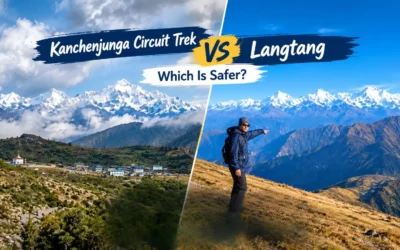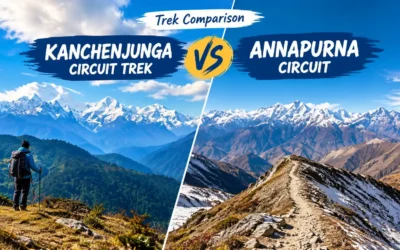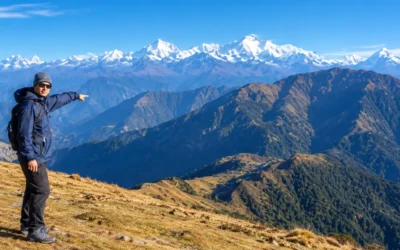
Yes, you can clearly see Kanchenjunga from Nepal during the trek. The circuit trek takes you to both the North Base Camp (Pangpema, 5,143m) and South Base Camp viewpoint (Oktang, 4,730m), where you stand directly in front of the world’s third-highest peak. Views start building from lower villages and become extraordinary above 3,000m.
Table of Contents
You’ve booked the flights. You’ve packed the boots. But the one question you keep asking is: will I actually see the mountain?
Here’s the honest answer yes. And closer than you ever imagined.
You can see Kanchenjunga from Darjeeling. You can see it from Gangtok. But on the Nepal circuit trek, you don’t just see it you walk into it. You eat breakfast in its shadow. You fall asleep with its glaciers glowing above your tent.
This guide covers where, when, and how you’ll see Kanchenjunga on the trek from the first glimpses in mid-altitude villages to standing directly below its north and south faces at two separate base camps.
What Is Kanchenjunga?
Kanchenjunga is the world’s third-highest mountain at 8,586 meters (28,169 feet). It sits on the border between eastern Nepal and the Indian state of Sikkim, with five distinct peaks three of which straddle the Nepal-India border.
The name means “Five Treasures of the High Snow” in Tibetan, referring to the mountain’s five peaks, which local tradition says hold five repositories of God: gold, silver, gems, grain, and holy books.
Unlike Mount Everest, which sits entirely within Nepal, or K2 in Pakistan, Kanchenjunga is shared between two countries. But the Nepal side offers the best trekking access and the closest ground-level views available without technical climbing.
The Kanchenjunga Circuit Trek in Nepal is one of the most remote and least-visited major trekking routes in the Himalayas. That remoteness comes with a reward: unobstructed, uncrowded views of one of Earth’s most massive mountains.
Need a deeper understanding? Check out our blog, “Where Is the Kanchenjunga Circuit Trek Located?” It will give you a clearer picture of the region and help sharpen your knowledge before the trek.
The Short Answer Yes, You Can See It, and Brilliantly
The circuit trek approaches Kanchenjunga from both the north and south sides. Views begin building from mid-altitude villages like Ghunsa (3,595m) and Kambachen (4,100m). From approximately 3,500m onwards, the mountain dominates the skyline.
Two iconic base camp viewpoints give you the closest legal ground-level views of Kanchenjunga on Earth:
- Pangpema (North Base Camp) 5,143m
- Oktang (South Base Camp viewpoint) 4,730m
Unlike the distant panoramic views from Darjeeling or Gangtok, on this trek you are at the mountain. You see the texture of the ice walls. You hear glaciers cracking. You watch avalanches tumble down slopes that look close enough to touch.
One important note: clear views are weather-dependent. Spring (March–May) and autumn (September–November) offer the best visibility. Monsoon season (June–August) brings heavy cloud cover that can obscure the mountain for days.
Top Kanchenjunga Viewpoints on the Nepal Trek Route
1. Pangpema North Base Camp (5,143m)
Pangpema is the crown jewel viewpoint of the entire circuit. This is the end of the northern valley and the highest trekking point on the standard route.
What you see: a direct, unobstructed view of Kanchenjunga’s northern face widely considered the most dramatic angle. The massive Kanchenjunga Glacier stretches below you, blue and fractured. On a clear morning, the golden light at sunrise on the north face is one of the most photographed mountain scenes in Nepal.
Surrounding peaks visible from Pangpema:
- Yalung Kang (8,505m)
- Kirat Chuli (7,362m)
- Wedge Peak (6,750m)
- Nepal Peak (7,177m)
- Pyramid Peak (7,140m)
- Twins Peak (7,350m)
Photography tip: Arrive at dawn. The golden light on the north face lasts only 30–45 minutes at sunrise. The difference between pre-dawn blue light and sunrise gold is dramatic.
2. Drohmo Ri Viewpoint (5,900m)
Drohmo Ri is one of Nepal’s best-kept secrets. Located just above Pangpema, this ridge viewpoint requires a 4–5 hour hike from North Base Camp. No technical climbing is required, but proper acclimatization is essential.
The reward: a 360-degree panoramic view of Kanchenjunga and all surrounding Himalayan massifs. This is the highest non-technical viewpoint in the entire Kanchenjunga region.
Peaks visible from Drohmo Ri:
- Kanchenjunga Main Summit (8,586m)
- Kanchenjunga Central (8,482m)
- Kanchenjunga South (8,494m)
- Yalung Kang (8,505m)
- Jannu / Kumbhakarna (7,710m)
- Pathibhara Chuli (7,140m)
Not many trekkers make this side trip. Those who do often call it the highlight of the entire journey.
Best for: photography enthusiasts and experienced trekkers wanting to go beyond base camp.
3. Oktang South Base Camp Viewpoint (4,730m)
Oktang sits at the end of the southern valley and offers an intimate, south-facing view of Kanchenjunga. What you see here is Kanchenjunga’s massive southern face, with the Yalung Glacier flowing below.
Local communities believe the mountain is home to protective mountain deities. Offerings and chortens (Buddhist shrines) are placed here by both trekkers and local people.
Surrounding peaks visible from Oktang:
- Kanchenjunga South (8,494m)
- Yalung Kang (8,505m)
- Kabru (7,412m)
- Rathong (6,678m)
- Talung (7,349m)
- Jannu (7,710m)
Compared to Pangpema, Oktang feels more intimate and less windswept. The southern face has a different texture and character, darker rock, steeper ice walls, and a sense of being enclosed by the massif.
Photography tip: Wide-angle lenses work beautifully here for capturing the glacier and mountain together in one frame.
At Kanchenjunga South Base Camp, you can enjoy all of these incredible viewpoints with the support of a trusted local trekking company like Himalaya Hub Adventure Pvt. Ltd.. With 15 years of experience and a 4.9/5 rating from trekkers, their expert Nepali team helps make your journey safer, smoother, and far more enjoyable.
4. Kambachen Village Area (4,100m)
Kambachen is a beautiful acclimatization stop on the northern approach. From here, Kanchenjunga’s north face and Jannu (7,710m) begin to dominate the sky.
Jannu’s dramatic sheer walls are among the most photographed features on the trek. The peak rises almost vertically from the valley floor, creating one of the most visually striking mountain profiles in the Himalayas.
Pro tip: Spend an extra acclimatization day here. It reduces altitude risks and gives you extra time for photography. Blue sheep and Himalayan tahr are commonly spotted around the high meadows near Kambachen.
5. Sinion La Pass (4,646m) and Other High Passes
The Kanchenjunga Circuit includes three connecting passes Sinion La (4,646m), Mirgin La (4,663m), and Sele La (4,480m) that link the north and south valleys.
From Sinion La, you get sweeping panoramic views across multiple Himalayan massifs. The pass crossings are less crowded than the base camps and offer perfect moments for quiet reflection and photography.
These are among the most dramatic high-altitude moments of the entire circuit.
6. Ramche (4,580m)
Ramche is the last overnight camp on the southern side, often called Kanchenjunga South Base Camp. From here, trekkers have morning and evening views of Rathong (6,678m) and the Kabru Himal range.
Wild blue sheep (bharal) wander the meadows around camp at night. The Yalung Glacier’s blue ice lakes are visible from the valley. It’s a peaceful, vast alpine camp surrounded by glacier moraines.
When Do You Get the Clearest Views?
| Season | Months | View Quality | Notes |
| Spring (Best) | March–May | 5/5 | Crystal clear skies, rhododendrons in bloom, ideal photography |
| Autumn (Best) | Sept–Nov | 5/5 | Post-monsoon clarity, stable weather, vivid skies |
| Winter | Dec–Feb | 3/5 | Clear skies but extreme cold; passes may be snowbound |
| Monsoon (Avoid) | June–Aug | 1/5 | Heavy cloud cover, rain; mountain rarely visible |
Best months overall: October and April offer the highest probability of all-day clear views.
Morning views are almost always better than afternoon views. Clouds typically build later in the day, obscuring peaks by early afternoon.
Tip: Plan an extra day at both base camps. If clouds block views on arrival, you’ll have a backup morning.
How Does the Nepal View Compare to Viewing Kanchenjunga from India?
From Darjeeling (Tiger Hill, Sandakphu), you can see Kanchenjunga at a distance of approximately 70+ kilometers. The views are beautiful especially at sunrise but they’re silhouette views. You see the shape and the skyline.
From Gangtok (Tashi View Point, Hanuman Tok), the experience is similar: distant panoramic views where the mountain appears as Sikkim’s “guardian deity” on the horizon.
From the Nepal Circuit Trek, you are right below and beside the mountain. The scale is completely different. You see the texture of the ice walls. You watch seracs calving off glaciers. You hear the mountain.
Key difference: Distant views give you silhouette and shape. Nepal trek views give you raw mountain texture, glacier detail, and full immersion.
Verdict: If you want to see Kanchenjunga, go to Darjeeling. If you want to feel it, trek Nepal.
Tips for the Best Kanchenjunga Views on the Trek
- Go early: Views are clearest in the first 2–3 hours after dawn. Set your alarm.
- Add buffer days: Book itineraries with at least one rest day at each base camp. Weather windows can be short.
- Bring the right camera gear: Wide-angle lens for base camps; zoom lens for close-up peak detail from Drohmo Ri.
- Acclimatize properly: Tired, unwell trekkers miss views because they can’t make the final push to viewpoints.
- Ask your guide about weather patterns: Experienced local guides know when skies are likely to clear.
- Check Nepal’s official weather: Visit mfd.gov.np/weather for official mountain weather forecasts.
- Sunrise is worth it: At Pangpema especially, the north face glows golden for only 30–45 minutes at dawn. It’s worth sleeping in your trekking clothes.
- Don’t skip Drohmo Ri: Most trekkers don’t know about this viewpoint. It’s the single best panoramic view on the entire circuit.
Other Mountains Visible from the Trek Route
The Kanchenjunga Circuit doesn’t just show you one mountain. From various points along the route, trekkers can see:
- Jannu / Kumbhakarna (7,710m) strikingly dramatic sheer walls, visible from Kambachen and lower north valley
- Yalung Kang / Kanchenjunga West (8,505m) Kanchenjunga’s sister peak, visible from both base camps
- Makalu (8,485m) visible on clear days from high passes
- Kabru (7,412m) south base camp area
- Kirat Chuli / Tent Peak (7,362m) visible from Pangpema
- Nepal Peak (7,177m) visible from Pangpema
- Rathong (6,678m) visible from Ramche camp area
The circuit trek is one of the few routes in Nepal where trekkers see multiple 7,000m+ and 8,000m+ peaks without technical climbing.
Conclusion The Trek That Takes You Into the Mountain
The answer is a confident yes. The Kanchenjunga Circuit Trek is one of the few places on Earth where you can stand directly in front of an 8,000m peak without technical climbing.
Both the north and south sides of the circuit offer world-class viewpoints at different altitudes. Pangpema, Oktang, and Drohmo Ri rank among the finest mountain viewpoints in all of Asia.
For photographers, mountain lovers, and adventure seekers, the views alone make this one of Nepal’s greatest trek experiences. You don’t just see Kanchenjunga here. You live with it for two weeks. You watch it at dawn and dusk. You fall asleep to the sound of its glaciers shifting in the night.
That’s the difference between looking at a mountain and walking into one.
Frequently Asked Questions
Can you see Kanchenjunga from Nepal without trekking?
From Taplejung town and nearby areas, you can see Kanchenjunga on clear days from lower elevations. But to see it up close, especially its north and south faces you need to trek the circuit. There are no roads to the base camps.
How close can you get to Kanchenjunga on the Nepal trek?
Pangpema (5,143m) brings you directly below Kanchenjunga’s north face. Drohmo Ri (5,900m), a non-technical hike above Pangpema, is even closer. Oktang (4,730m) puts you in front of the Yalung Glacier and the southern face.
What altitude do the best Kanchenjunga views start at?
Clear views begin around 3,500m (Ghunsa and Kambachen areas). The most dramatic views are above 4,500m at the base camps. The best panoramic view is from Drohmo Ri at approximately 5,900m.
Is it guaranteed you will see Kanchenjunga on the trek?
No guarantees with Himalayan weather. However, trekkers who visit in spring or autumn and add buffer days at the base camps have an 80–90% chance of seeing the mountain clearly. Monsoon season (June–August) offers the least visibility.
What is the best viewpoint for Kanchenjunga in Nepal?
Pangpema (5,143m) is the most dramatic single viewpoint, with a direct view of the northern face. Drohmo Ri (5,900m) offers the best 360-degree panorama. Oktang (4,730m) gives the best southern face view with the Yalung Glacier.
When is the best time to see Kanchenjunga from Nepal?
October and April are the best months for clear mountain views. Spring (March–May) and autumn (September–November) are both excellent seasons. Avoid the monsoon (June–August) when clouds consistently block views.